
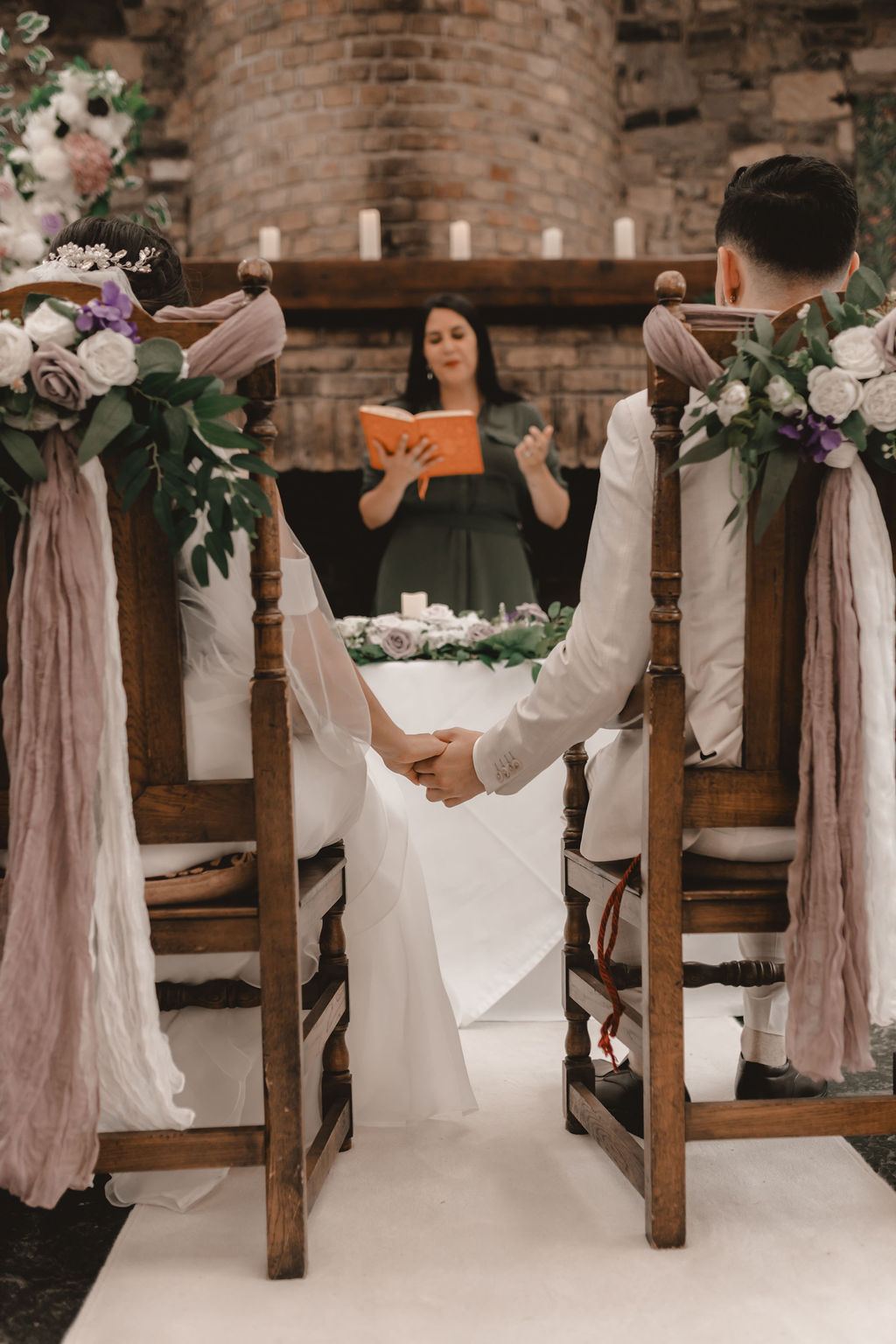
In Ireland, there are three legally valid ways to get married: civil, religious, or secular. Each is equally binding under Irish law. What differs is who officiates, where you can hold it, what the ceremony can include, and — importantly for queer couples — who welcomes you.
This guide breaks down each option honestly, without the hotel-brochure gloss. If you're planning a queer wedding in Ireland, some of these paths are safer than others. Let's talk about it.
Two things first:
- All three ceremony types require the same 3-month HSE notification and the Marriage Registration Form (MRF). This guide covers the ceremony itself — for the paperwork side, read our step-by-step guide.
- Anyone officiating a legal marriage must be on the official Register of Solemnisers. If they aren't, the ceremony isn't legal — no matter how real it looks. Always check.
Na Irlanda, existem três formas legalmente válidas de casar: civil, religiosa ou secular. Cada uma é igualmente vinculante sob a lei irlandesa. O que muda é quem oficia, onde a cerimônia pode acontecer, o que a cerimônia pode incluir, e — importante pra casais queer — quem te acolhe.
Esse guia destrincha cada opção honestamente, sem o verniz de brochura de hotel. Se você tá planejando um casamento queer na Irlanda, alguns desses caminhos são mais seguros que outros. Bora falar sobre isso.
Duas coisas primeiro:
- Os três tipos de cerimônia exigem a mesma notificação HSE de 3 meses e a Marriage Registration Form (MRF). Esse guia cobre a cerimônia em si — pra parte da papelada, lê o nosso guia passo-a-passo.
- Quem oficia um casamento legal precisa estar no Register of Solemnisers oficial. Se não estiver, a cerimônia não é legal — por mais real que pareça. Sempre confere.
01 · CivilThe state route
Legally binding · state-run · non-religious
Performed by a civil registrar (HSE employee), a civil ceremony is a legally binding, non-religious way to marry in Ireland.
What's allowed
- Held in a registry office, or the registrar can travel to an approved venue for an extra fee (typically €70-100).
- Can be outdoors, but only in an approved outdoor space.
- Readings and music are allowed — as long as they're secular (no hymns, no prayers, no references to God, the supernatural, or the afterlife).
What's restricted
- Only during office working hours — typically Monday to Friday, roughly 9am to 4pm. No evenings, no weekends in most areas.
- Registrars usually only officiate in the county they're based in.
- No religious or spiritual content whatsoever — including songs, symbols, or references.
Cost
- The €200 notification fee (the HSE step).
- Small "fuel" or venue-inspection fee (€70-100) if held outside the registry office.
- Usually the cheapest option overall.
For queer couples
- Legally protected since the Marriage Act 2015. A civil registrar cannot refuse you.
- The safest, most predictable route — no chance of encountering religious discomfort or an officiant who won't work with you.
01 · CivilA rota do estado
Vinculante legalmente · conduzida pelo estado · não-religiosa
Oficiada por um civil registrar (funcionário da HSE), a cerimônia civil é uma forma vinculante legalmente e não-religiosa de casar na Irlanda.
O que é permitido
- Feita em um registry office, ou o registrar pode ir até um venue aprovado por uma taxa extra (tipicamente €70-100).
- Pode ser outdoor, mas só em um espaço externo aprovado.
- Leituras e música são permitidas — desde que sejam seculares (sem hinos, sem orações, sem referências a Deus, ao sobrenatural ou à vida após a morte).
O que é restrito
- Só durante horário de expediente — tipicamente segunda a sexta, mais ou menos das 9h às 16h. Sem noites, sem fins de semana na maioria das áreas.
- Registrars normalmente só oficiam no condado onde são baseados.
- Zero conteúdo religioso ou espiritual — incluindo músicas, símbolos ou referências.
Custo
- A taxa de €200 da notificação (o passo da HSE).
- Pequena taxa de "combustível" ou inspeção do venue (€70-100) se for fora do registry office.
- Normalmente a opção mais barata no geral.
Pra casais queer
- Legalmente protegida desde o Marriage Act 2015. Um civil registrar não pode se recusar.
- A rota mais segura e previsível — sem chance de encontrar desconforto religioso ou um oficiante que não vai trabalhar com vocês.

02 · ReligiousThe faith route
Legally binding · faith-based · varies by tradition
Performed by a registered religious solemniser — Catholic priest, Church of Ireland minister, rabbi, imam, Spiritualist Union celebrant, Interfaith minister, and others.
What's allowed
- Usually in a place of worship (church, synagogue, mosque, etc.). Catholic weddings must be in a consecrated church or chapel.
- Interfaith and Spiritualist ministers often officiate at other venues — indoor or outdoor — and typically work with all beliefs and none.
- Content follows the religious tradition — hymns, prayers, readings, rituals as appropriate.
- Can happen weekdays or weekends (unlike civil).
What's restricted
- Some traditions require pre-marriage courses, membership, or baptism records.
- Catholic weddings can only be in consecrated spaces.
- You (not the solemniser) return the signed MRF to any Civil Registration Service within one month for the marriage to be legally registered.
Cost
- The €200 notification fee.
- Solemniser fee varies widely: €200-800 typical for Catholic donations; €450-600 typical for Spiritualist/Interfaith.
- Church fee separate for use of the space.
For queer couples — read this carefully
- The Roman Catholic Church does not perform same-sex marriages. This is a firm doctrinal position — and the term "same-sex" is precise here (a queer person marrying someone of a different sex may still be able to have a Catholic wedding, subject to other Church requirements). Some individual priests offer "blessings" outside a legal marriage but cannot legally solemnise it.
- The Church of Ireland is in a period of change on this. Some parishes will conduct queer marriages; many won't. Ask directly, and don't accept vague answers.
- The Spiritualist Union of Ireland and Interfaith Ministers are typically fully LGBTQ+-affirming and marry queer couples without issue.
- Other faith traditions vary — check with your specific solemniser before assuming.
02 · ReligiosaA rota da fé
Vinculante legalmente · baseada em fé · varia por tradição
Oficiada por um solemniser religioso registrado — padre católico, ministro da Church of Ireland, rabino, imã, celebrante da Spiritualist Union, ministro Interfaith, entre outros.
O que é permitido
- Normalmente num local de culto (igreja, sinagoga, mesquita, etc.). Casamentos católicos têm que ser em igreja ou capela consagrada.
- Ministros Interfaith e Spiritualist geralmente oficiam em outros venues — indoor ou outdoor — e tipicamente trabalham com pessoas de todas as crenças ou de nenhuma.
- Conteúdo segue a tradição religiosa — hinos, orações, leituras, rituais, conforme apropriado.
- Pode ser em dias de semana ou fim de semana (diferente da civil).
O que é restrito
- Algumas tradições exigem cursos pré-matrimoniais, filiação, ou registros de batismo.
- Casamentos católicos só em espaços consagrados.
- Vocês (não o solemniser) devolvem a MRF assinada em qualquer Civil Registration Service dentro de 1 mês pro casamento ser registrado legalmente.
Custo
- A taxa de notificação de €200.
- Taxa do solemniser varia bastante: €200-800 típico pra doações católicas; €450-600 típico pra Spiritualist/Interfaith.
- Taxa da igreja separada pelo uso do espaço.
Pra casais queer — lê isso com atenção
- A Igreja Católica Romana não realiza casamentos same-sex. Essa é uma posição doutrinária firme — e o termo "same-sex" é preciso aqui (uma pessoa queer que casa com alguém de sexo diferente ainda pode ter casamento católico, sujeito a outros requisitos da Igreja). Alguns padres individuais oferecem "bênçãos" fora de um casamento legal, mas não podem oficiar legalmente.
- A Church of Ireland está num período de mudança sobre isso. Algumas paróquias realizam casamentos queer; muitas não. Pergunta direto e não aceita respostas vagas.
- A Spiritualist Union of Ireland e os Interfaith Ministers são tipicamente totalmente LGBTQ+-affirming e casam casais queer sem problema.
- Outras tradições religiosas variam — confere com seu solemniser específico antes de presumir.
03 · SecularThe humanist route
Legally binding · non-religious · fully personal
Performed by a registered secular solemniser — most commonly a celebrant of the Humanist Association of Ireland (HAI). Humanist ceremonies have been legally recognised since 2013.
What's allowed
- Any day, any time, any place — indoors, outdoors, in a hotel, on a beach, in a garden.
- The location must be publicly accessible with a postal address or identifiable landmark. A private home not usually open to the public doesn't qualify.
- Fully personalisable — the celebrant meets with you to write a ceremony that reflects your relationship, your story, the people in the room.
What's restricted
- Content is 100% non-religious — no hymns, no prayers, no references to God, the supernatural, or the afterlife.
- You can honour deceased loved ones (e.g., a remembrance candle), but not through religious framing.
- You (not the solemniser) return the signed MRF to any Civil Registration Service within one month for the marriage to be legally registered.
Cost
- The €200 notification fee.
- Humanist celebrant fees vary — check with the HAI or your chosen celebrant directly.
For queer couples
- Inherently inclusive. One of the founding tenets of humanism is tolerance for people of all backgrounds and belief systems. LGBTQ+ couples are welcomed as a matter of principle, not exception.
- Ceremonies are usually the most personal and tailored — great if the day matters more as a moment of your story than as a fitting into an existing tradition.
03 · SecularA rota humanista
Vinculante legalmente · não-religiosa · totalmente personalizada
Oficiada por um solemniser secular registrado — mais comumente um celebrante da Humanist Association of Ireland (HAI). Cerimônias humanistas são legalmente reconhecidas desde 2013.
O que é permitido
- Qualquer dia, qualquer horário, qualquer lugar — indoor, outdoor, num hotel, na praia, num jardim.
- O local precisa ser publicamente acessível, com endereço postal ou marco identificável. Uma casa privada que normalmente não é aberta ao público não vale.
- Totalmente personalizável — o celebrante se encontra com vocês pra escrever uma cerimônia que reflete o relacionamento, a história, as pessoas na sala.
O que é restrito
- Conteúdo é 100% não-religioso — sem hinos, sem orações, sem referências a Deus, ao sobrenatural ou à vida após a morte.
- Vocês podem honrar entes queridos que já se foram (por exemplo, uma vela em memória), mas não através de enquadramento religioso.
- Vocês (não o solemniser) devolvem a MRF assinada em qualquer Civil Registration Service dentro de 1 mês pro casamento ser registrado legalmente.
Custo
- A taxa de notificação de €200.
- Taxa do celebrante humanista varia — confere com a HAI ou diretamente com o celebrante escolhido.
Pra casais queer
- Intrinsecamente inclusiva. Um dos princípios fundadores do humanismo é a tolerância a pessoas de todos os backgrounds e sistemas de crença. Casais LGBTQ+ são acolhidos como princípio, não como exceção.
- Cerimônias são normalmente as mais pessoais e personalizadas — ótimo se o dia importa mais como um momento da sua história do que como encaixe em uma tradição existente.
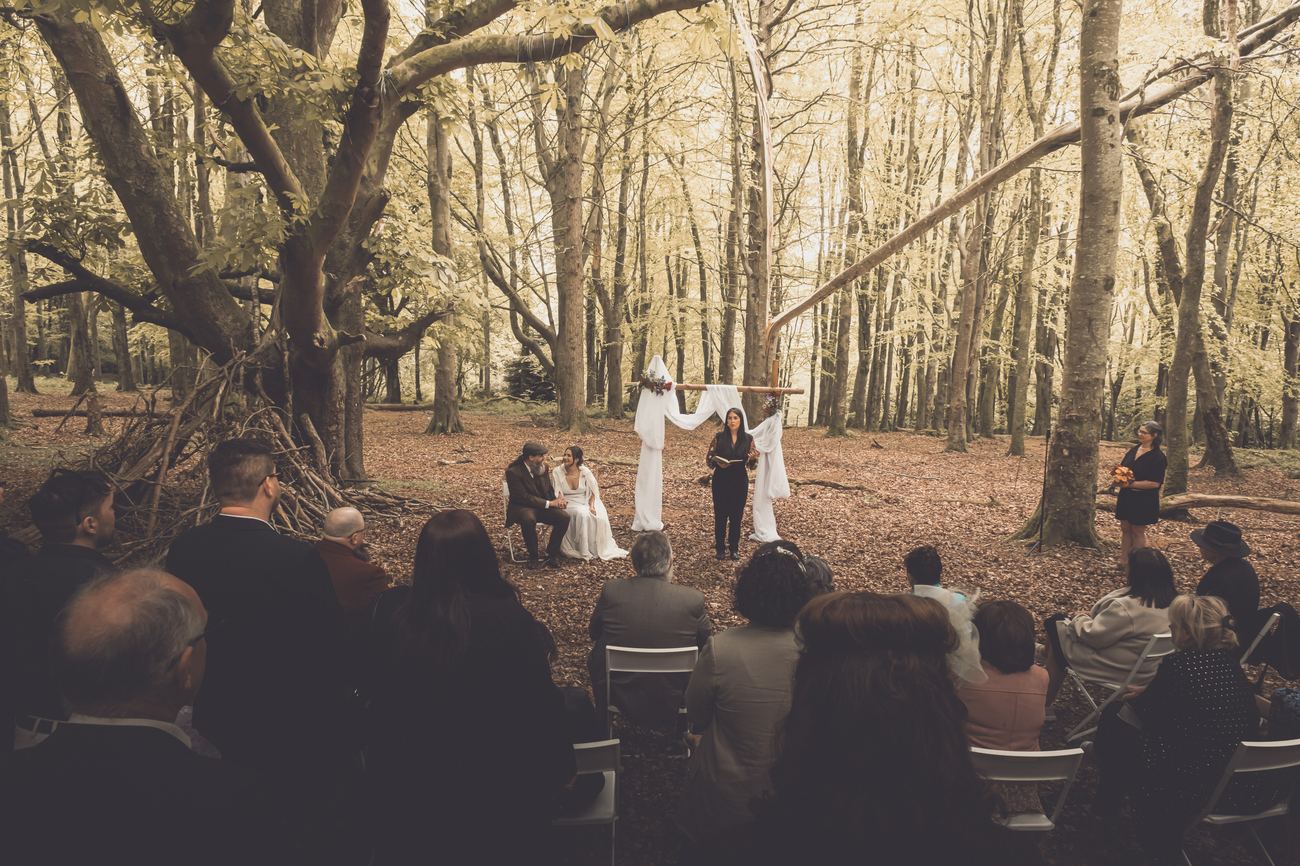
04 · Side by sideThe comparison table
Quick-scan version — every row is a real, factual difference between the three routes.
04 · Lado a ladoA tabela comparativa
Versão pra bater o olho — cada linha é uma diferença real e factual entre os três caminhos.
| Civil | ReligiousReligiosa | Secular / HumanistSecular / Humanista | |
|---|---|---|---|
| Legally bindingLegalmente vinculante | ✓ | ✓ | ✓ |
| 3-month HSE noticeNotificação HSE de 3 meses | ✓ | ✓ | ✓ |
| €200 notification feeTaxa de €200 | ✓ | ✓ | ✓ |
| Any day of the weekQualquer dia da semana | Mon-Fri | ✓ | ✓ |
| EveningsHorário noturno | ✗ | DependsDepende | ✓ |
| Any locationQualquer lugar | Approved venues onlySó venues aprovados | Depends on traditionDepende da tradição | Almost anywhere publicly accessibleQuase qualquer lugar publicamente acessível |
| Outdoor allowedOutdoor permitido | Approved spaces onlySó espaços aprovados | Yes (Interfaith/Spiritual); no (Catholic)Sim (Interfaith/Spiritual); não (Católica) | ✓ |
| Religious contentConteúdo religioso | ✗ | ✓ | ✗ |
| Personalisable ceremonyCerimônia personalizável | LimitedLimitada | Within traditionDentro da tradição | FullyTotalmente |
| Who registers the MRFQuem registra a MRF | Registrar (automatic)Registrar (automático) | You, within 1 monthVocês, em 1 mês | You, within 1 monthVocês, em 1 mês |
| Officiant fee (typical)Taxa do oficiante (típico) | €0-100 | €200-800 | Ask HAIConsulta HAI |
| Same-sex welcomeSame-sex é bem-vindo | Guaranteed by lawGarantido por lei | Varies wildlyVaria muito | Yes — as principleSim — como princípio |
05 · The pickWhich is right for you?
There's no universally right answer. But here's how we help our couples decide:
Choose civil if…
- You want the simplest, cheapest legal marriage.
- You're happy with a weekday ceremony during working hours.
- You don't need a personal ceremony — the registration is what matters.
- You want no chance of religious or ideological friction, guaranteed.
Choose religious if…
- Faith is central to your identity or relationship.
- You have a specific religious community that welcomes you.
- You want the ceremony rooted in a tradition — the ritual, the space, the words.
- You've confirmed your solemniser and community actively welcome LGBTQ+ couples (this is critical).
Choose secular / Humanist if…
- You want a highly personal ceremony written for you and your story.
- You want flexibility on venue, day, time, everything.
- You want guaranteed inclusion without needing to vet the officiant's beliefs.
- You're not religious, or you're of mixed backgrounds and don't want to pick one.
For most queer couples we work with, the answer ends up being civil or Humanist. Not because religious is off the table, but because the safest routes are the ones where welcome is built in, not asked for.
05 · A escolhaQual é pra vocês?
Não existe uma resposta certa universal. Mas aqui é como a gente ajuda nossos casais a decidirem:
Escolham civil se…
- Vocês querem o casamento legal mais simples e barato.
- Vocês tão OK com cerimônia em dia de semana durante o horário comercial.
- Vocês não precisam de uma cerimônia pessoal — o registro é o que importa.
- Vocês querem zero chance de atrito religioso ou ideológico, garantido.
Escolham religiosa se…
- Fé é central pra sua identidade ou relacionamento.
- Vocês têm uma comunidade religiosa específica que os acolhe.
- Vocês querem a cerimônia enraizada em uma tradição — o ritual, o espaço, as palavras.
- Vocês confirmaram que o solemniser e a comunidade acolhem casais LGBTQ+ ativamente (isso é crítico).
Escolham secular / Humanista se…
- Vocês querem uma cerimônia altamente pessoal, escrita pra vocês e pra sua história.
- Vocês querem flexibilidade de venue, dia, horário, tudo.
- Vocês querem inclusão garantida sem precisar checar as crenças do oficiante.
- Vocês não são religiosos, ou são de backgrounds mistos e não querem escolher um.
Pra maioria dos casais queer que trabalha com a gente, a resposta acaba sendo civil ou Humanista. Não porque religiosa esteja fora de cogitação, mas porque as rotas mais seguras são aquelas onde o acolhimento é embutido, não pedido.
Where We Do fits
Our celebrant, Kamila, is an HSE-registered solemniser who conducts spiritual and interfaith ceremonies — which means she can legally marry you and structure the day around your beliefs, whether you have none, some, or many. She works in English, Portuguese and Spanish.
If you'd rather have the ceremony, the paperwork, the photos, the film and the content all handled by one team who knows queer weddings inside out, that's exactly why We Do exists.
Not sure where you are in the planning? Open our free checklist — tell it your date, and it shows you what to do first.
✦ Sources & further reading
All legal and factual claims verified against Irish government sources at publication. Requirements can change — always confirm with official sources before making decisions.
- Citizens Information — Different types of marriage ceremony in Ireland
- Citizens Information — Religious and secular marriage ceremonies
- Citizens Information — Civil marriage ceremonies
- gov.ie — Get married in Ireland
- Register of Solemnisers
- Humanist Association of Ireland — Weddings
- Spiritualist Union of Ireland — Spiritual Ceremonies
- Marriage Act 2015
Onde a We Do entra
Nossa celebrante, a Kamila, é solemniser registrada na HSE que conduz cerimônias espirituais e interfaith — o que significa que ela pode casar vocês legalmente e estruturar o dia em torno das suas crenças, sejam elas nenhuma, algumas ou muitas. Ela trabalha em inglês, português e espanhol.
Se você prefere ter a cerimônia, a papelada, as fotos, o filme e o conteúdo tudo na mão de um time que conhece casamento queer por dentro, é exatamente pra isso que a We Do existe.
Não sabe em que ponto do planejamento você tá? Abre nosso checklist gratuito — fala a sua data, e ele te mostra o que fazer primeiro.
✦ Fontes & leitura complementar
Todas as afirmações legais e factuais verificadas com fontes oficiais do governo irlandês na publicação. Requisitos podem mudar — sempre confirma com fontes oficiais antes de tomar decisões.
- Citizens Information — Tipos de cerimônia de casamento na Irlanda
- Citizens Information — Cerimônias religiosas e seculares
- Citizens Information — Cerimônia civil
- gov.ie — Casar na Irlanda
- Register of Solemnisers
- Humanist Association of Ireland — Cerimônias
- Spiritualist Union of Ireland — Cerimônias espirituais
- Marriage Act 2015