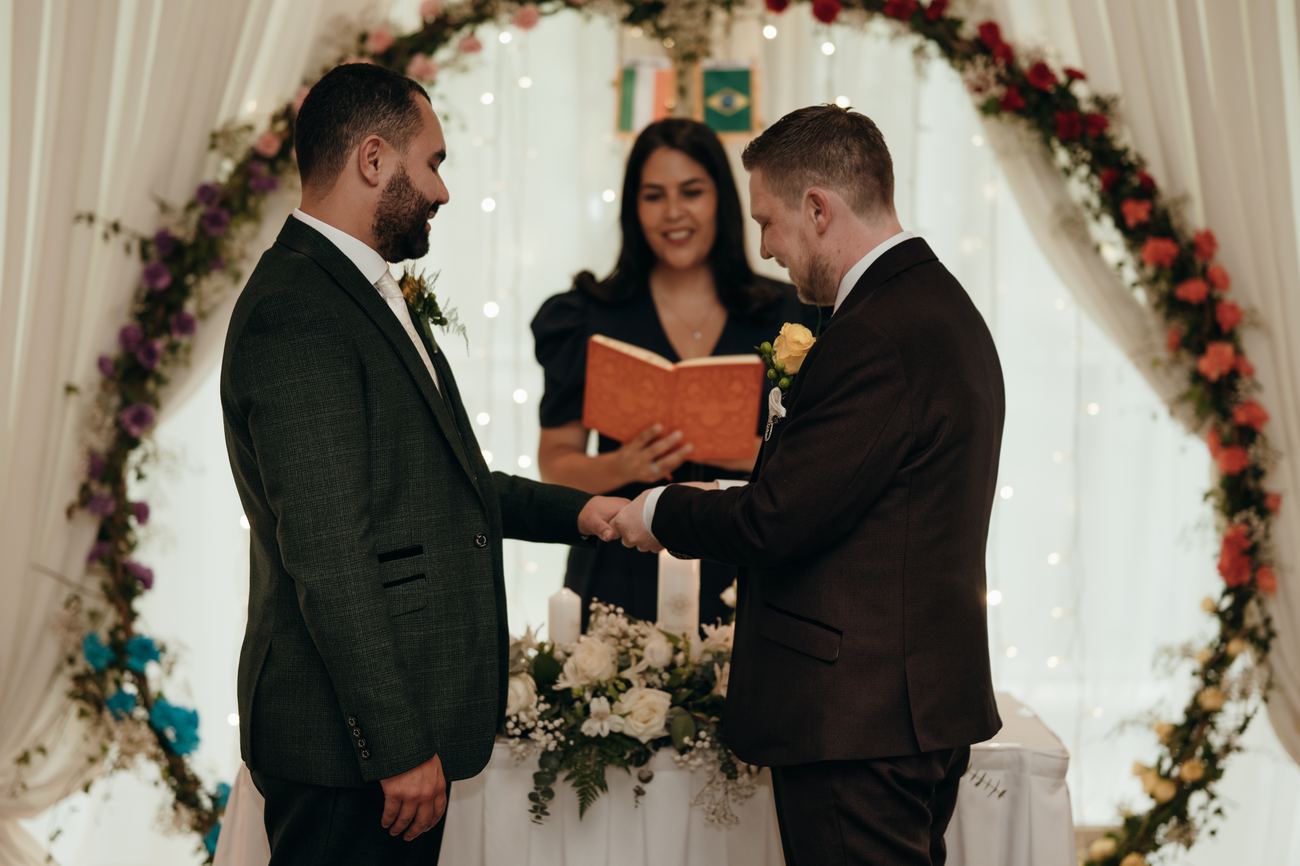
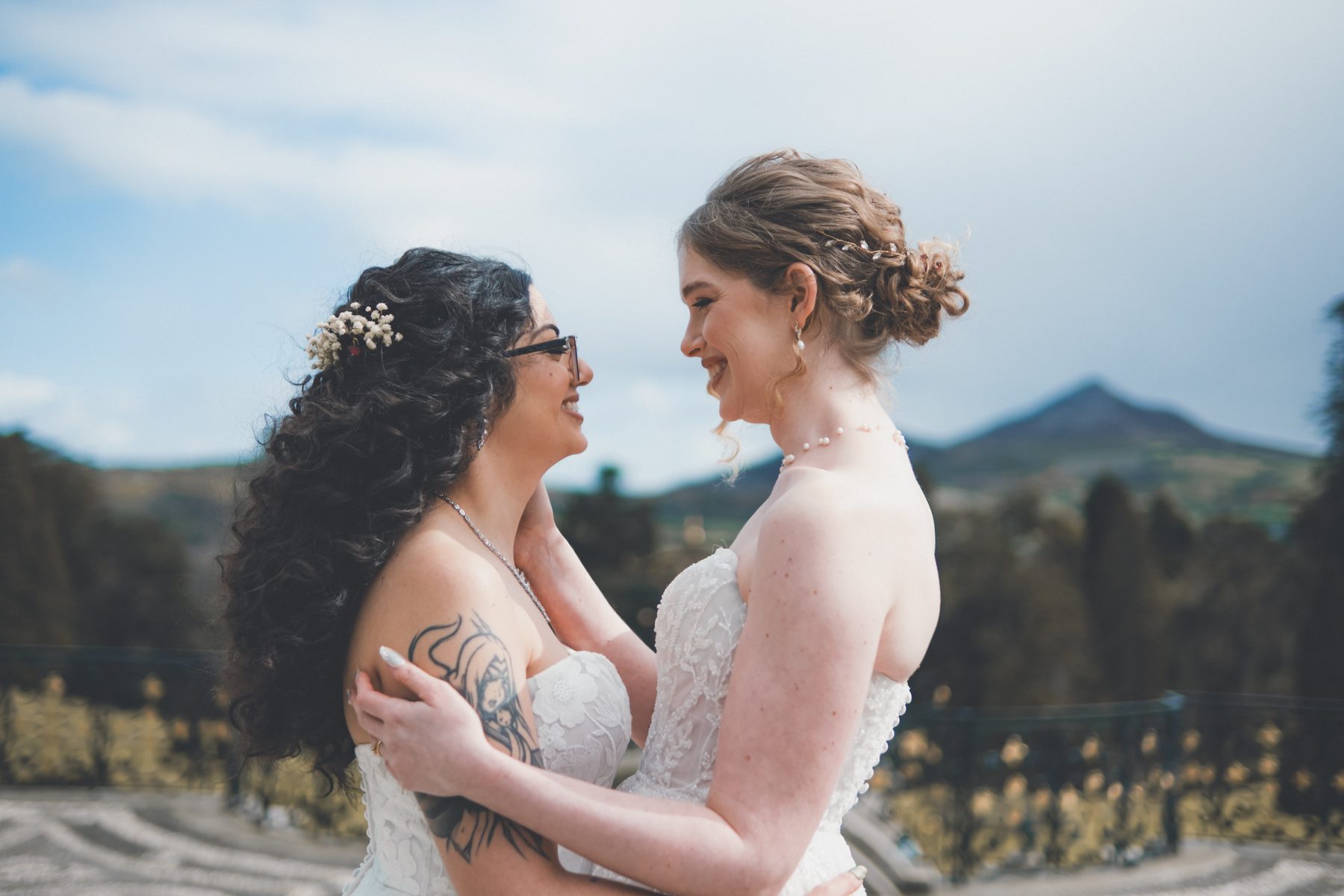
Here's the thing about planning a queer wedding in Ireland in 2026: it's completely legal, increasingly celebrated, and still full of small paper cuts straight couples never see.
The venue that lists "queer weddings welcome" but has never actually hosted one. The celebrant who defaults to "bride and groom" on autopilot. The registrar office that mixes up whose surname changes to what. This guide is our attempt to save you from those.
Not the big scary things — Ireland's legal framework is genuinely good. But the small, daily, exhausting things that come from being the first queer couple most vendors have worked with.
We're We Do — Ireland's first queer-affirming wedding collective. Photographer, celebrant, DJ, mobile films & photos. We do this for a living. Here's what we tell our couples.
01 · The legal bitHSE 3-month notice
Ireland requires at least 3 months' notice before any civil, religious or secular marriage. This is not a suggestion — it's the law under the Civil Registration Act 2004 (Section 46), amended by the Marriage Act 2015 which made same-sex marriage legal following the May 22, 2015 referendum.
What actually happens
- Book the HSE Civil Registration Service appointment at least 3 months and 1 day before your intended ceremony date. Book online at HSE.ie for some areas, or by phone for others.
- Both of you must attend the notification appointment in person.
- You'll pay a €200 non-refundable notification fee at (or before) the appointment.
- You'll receive a Marriage Registration Form (MRF) — sometimes called "the green folder." Valid for 6 months from your intended wedding date. Guard it with your life.
- Your solemniser must be on the official Register of Solemnisers — verify before booking anyone.
- Civil ceremonies: the registrar solemnising your marriage handles registration directly.
- Religious or secular ceremonies: the signed MRF must be returned to a Civil Registration Service within one month for the marriage to be legally registered.
What trips couples up in 2026
- The 3 months is calendar, not "3-ish." If you notify on March 15, your earliest ceremony date is June 15.
- Appointments book up far in advance. Popular 2026 dates in Dublin, Cork and Kerry are being claimed 6+ months ahead.
- Photo ID and PPS numbers required. If either partner doesn't have a PPS number, start that process before the appointment.
- Documents from outside the EU may need an apostille or embassy legalisation. Since 16 February 2019, EU-issued documents no longer need this.
- Non-EEA partners may be called for an additional in-person interview by the Registrar. Standard procedure — bring evidence of your relationship to be safe.
If you want to marry in 12 months, book the HSE notification appointment in the first 2 months of planning.
A verdade sobre planejar um casamento queer na Irlanda em 2026: é completamente legal, cada vez mais celebrado, e ainda cheio de pequenos cortes de papel que casais héteros nunca veem.
O venue que anuncia "casamentos queer são bem-vindos" mas nunca hospedou um. O celebrante que fala "noiva e noivo" no automático. O cartório que confunde qual sobrenome muda pra qual. Esse guia é nossa tentativa de te poupar desses momentos.
Não das coisas grandes e assustadoras — o arcabouço legal da Irlanda é genuinamente bom. Mas dos pequenos, diários, exaustivos detalhes que vêm de ser o primeiro casal queer com quem a maioria dos fornecedores trabalhou.
A gente é a We Do — primeiro coletivo queer-affirming de casamento da Irlanda. Fotografia, celebrante, DJ, filmes & fotos no mobile. É nosso trabalho. Aqui é o que a gente conta pros nossos casais.
01 · A parte legalNotificação HSE de 3 meses
A Irlanda exige no mínimo 3 meses de notificação antes de qualquer casamento civil, religioso ou secular. Isso não é sugestão — é lei, sob o Civil Registration Act 2004 (Seção 46), emendado pelo Marriage Act 2015 que tornou o casamento same-sex legal depois do referendo de 22 de maio de 2015.
O que realmente acontece
- Marca o agendamento da HSE Civil Registration Service com no mínimo 3 meses e 1 dia antes da data da cerimônia. Agenda online no HSE.ie em algumas áreas, ou por telefone.
- Vocês dois precisam ir ao agendamento presencialmente.
- Vai pagar uma taxa de €200 não-reembolsável no dia (ou antes) do agendamento.
- Vocês recebem uma Marriage Registration Form (MRF) — às vezes chamada de "a pasta verde". Válida por 6 meses a partir da data da cerimônia. Guarda ela como se fosse ouro.
- Quem oficia (solemniser) precisa estar no Register of Solemnisers oficial — confirma antes de fechar com qualquer pessoa.
- Cerimônia civil: o próprio registrar que oficia trata do registro direto.
- Cerimônia religiosa ou secular: a MRF assinada precisa ser devolvida numa Civil Registration Service dentro de 1 mês pro casamento ser legalmente registrado.
O que pega os casais em 2026
- Os 3 meses é calendário, não "uns 3". Se notifica em 15 de março, a data mais cedo pra cerimônia é 15 de junho.
- Agendamentos esgotam com muita antecedência. Datas populares de 2026 em Dublin, Cork e Kerry tão sendo garantidas 6+ meses antes.
- Documento com foto e PPS numbers obrigatórios. Se algum de vocês não tem PPS number, começa esse processo antes do agendamento.
- Documentos de fora da UE podem precisar de apostilamento ou legalização consular. Desde 16 de fevereiro de 2019, documentos emitidos na UE não precisam mais disso.
- Parceiros de fora do EEA podem ser chamados pra entrevista adicional presencial. Procedimento padrão — leva evidência do relacionamento pra garantir.
Se quer casar em 12 meses, marca o agendamento HSE nos primeiros 2 meses de planejamento.
Our free anti-panic checklist tells you the latest date you can start each task without panicking. Uses your actual wedding date. No email required.
Open the checklist →02 · The peopleFinding queer-affirming vendors
"LGBTQ+ friendly" on a website means one of three things:
- Genuinely affirming — vendor has worked with multiple queer couples, uses the right pronouns without prompting, doesn't default to "the bride" and "the groom".
- Willing but new — supportive but you'd be their first. Kind, but expect to educate.
- Optics only — rainbow on the homepage, but the intake form still asks "Bride's name" and "Groom's name". Avoid.
How to tell which is which
Ask specific questions:
- "How many queer weddings have you photographed / celebrated / DJ'd?" Confident answer signals experience; vagueness signals inexperience.
- "Can you share the last two you worked on?" If they can't, they haven't done any recently.
- "Do you use pronouns in your intake form?" If yes, they've thought about it.
- "How do you handle group/family photos with divided or complicated families?" Queer couples often navigate this. A good vendor asks about it first.
Watch the language: A queer-affirming vendor talks about "couples", "partners", "the person walking down the aisle" — not "the bride" as default.
03 · The placeVenue red flags
Venues are where most queer-friendly-optics-only shows up. What to look for:
The green flags 🟢
- Real queer couples in their portfolio (not stock photos).
- Staff who use "partner" / "couple" from the first email.
- Ceremony space that doesn't assume a traditional walking-down-the-aisle configuration.
- A clear published inclusion policy (not tucked in a hidden FAQ).
- All-gender bathrooms or clearly marked as available.
The red flags 🚩
- Wedding brochure with only heterosexual couples.
- Rate cards that split "bride package" and "groom package".
- Church-adjacent venues that require religious accommodation.
- Refusal to give a walkthrough with your celebrant.
- Being asked "who's the bride?" repeatedly after clarifying.
Nosso checklist anti-pânico gratuito te fala a última data que você pode começar cada tarefa sem entrar em pânico. Usa sua data real de casamento. Sem pedir email.
Abre o checklist →02 · As pessoasComo achar fornecedores queer-affirming
"LGBTQ+ friendly" num site quer dizer uma dessas três coisas:
- Genuinamente affirming — o fornecedor já trabalhou com vários casais queer, usa os pronomes certos sem precisar corrigir, não fala "a noiva e o noivo" por default.
- Disposto mas novo — solidário, mas você seria o primeiro. Legal, mas prepara pra educar.
- Só marketing — arco-íris na home, mas o formulário ainda pergunta "Nome da noiva" e "Nome do noivo". Evita.
Como identificar cada um
Faz perguntas específicas:
- "Quantos casamentos queer você já fotografou / celebrou / tocou como DJ?" Resposta confiante sinaliza experiência; vagueza sinaliza falta.
- "Pode compartilhar os dois últimos que trabalhou?" Se não consegue, é porque não fez nenhum recentemente.
- "Usa pronomes no seu formulário de contato?" Se sim, já pensou nisso.
- "Como lida com fotos de família com dinâmicas complicadas ou divididas?" Casais queer navegam isso muito. Fornecedor bom pergunta primeiro.
Fica de olho na linguagem: Um fornecedor queer-affirming fala em "casais", "parceiros", "a pessoa que entra no altar" — não "a noiva" por default.
03 · O lugarRed flags de venue
Venues são onde mais aparece o "queer-friendly só na aparência". O que procurar:
Sinais verdes 🟢
- Casais queer reais no portfolio (não foto de banco de imagens).
- Equipe que usa "parceiros" / "casal" desde o primeiro email.
- Espaço de cerimônia que não assume configuração tradicional de altar.
- Política de inclusão publicada de forma clara (não escondida numa FAQ).
- Banheiros de todos os gêneros ou claramente marcados como disponíveis.
Red flags 🚩
- Brochura de casamento só com casais héteros.
- Tabela de preços com "pacote da noiva" e "pacote do noivo".
- Venues religiosos que exigem acomodações religiosas.
- Recusa em fazer walkthrough com seu celebrante.
- Perguntar "quem é a noiva?" repetidamente depois de você já ter esclarecido.
04 · The voiceWhat "queer-friendly celebrant" means
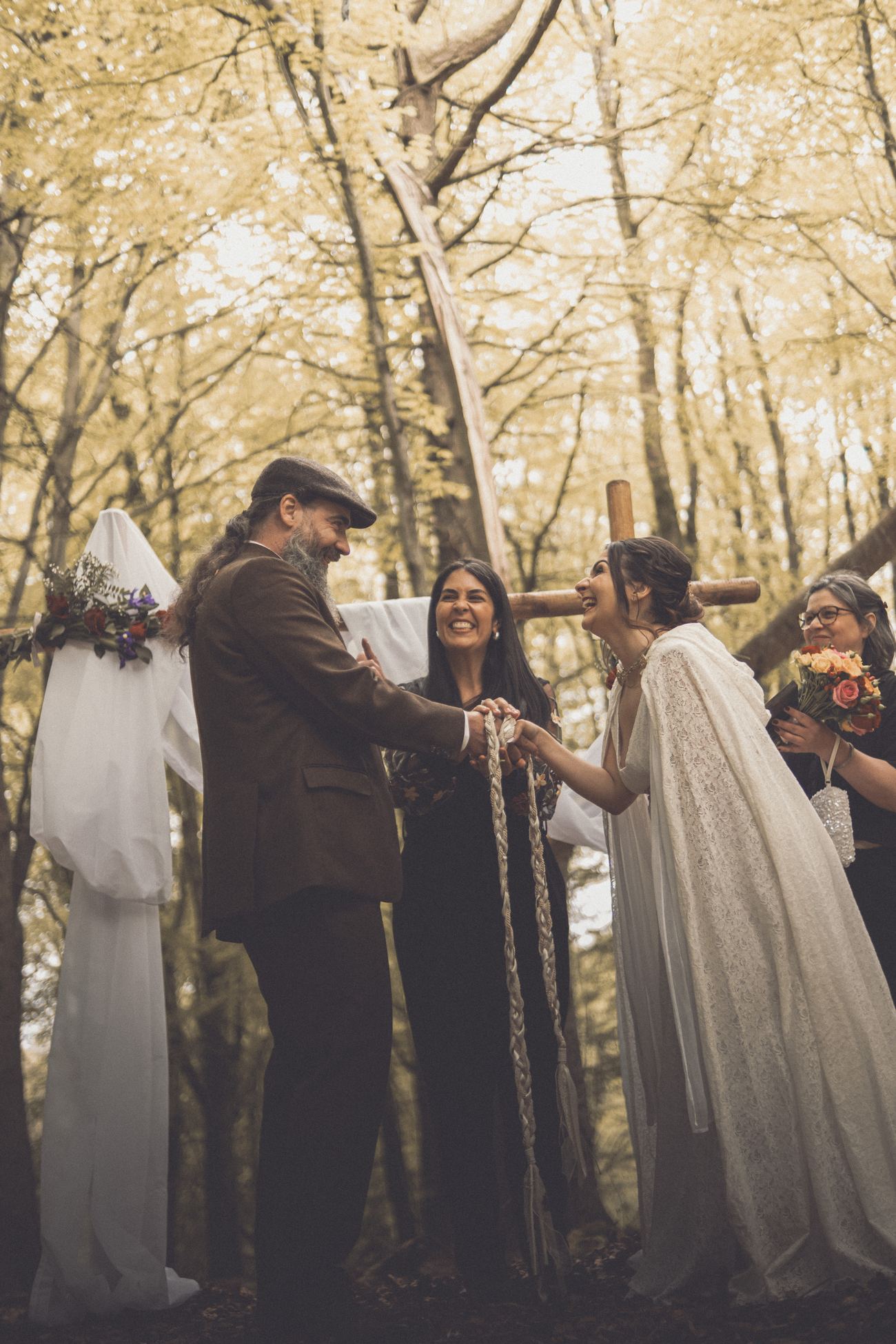
In Ireland, only HSE-registered solemnisers can legally marry you. If someone can't sign your MRF, the ceremony isn't legally valid — even if it feels legitimate.
Beyond legality, a queer-affirming celebrant should:
- Meet with you both to understand your story, not fit you into a template.
- Write a ceremony that reflects your relationship — not a generic script with names swapped in.
- Handle tricky family dynamics with care.
- Know how to incorporate multiple traditions if you're from different cultures.
- Not upcharge for basic queer inclusion. There is no such thing as an extra fee for queer ceremonies.
Kamila — our celebrant — is HSE-registered, works in English, Portuguese, and Spanish, and has celebrated dozens of queer weddings across Ireland. That's the standard to look for.
05 · The whenThe realistic timeline
Most Irish wedding planning content is designed for straight couples with wealthy parents and 18 months to burn. Here's what actually works for the couples we see:
- 12+ months before: HSE notification booked. Venue secured. Photographer booked. Budget agreed.
- 9 months before: Celebrant confirmed. DJ / band confirmed. Save-the-dates sent.
- 6 months before: Menu tasting. Outfits ordered (3-4 months for alterations). Mobile films & photos booked.
- 3 months before: Final numbers to venue. Rings sized. Planning call with celebrant and a detailed look through your ceremony outline.
- 1 month before: MRF collected. Seating plan. Vendor final payments due.
- 1 week before: Confirm arrival times with every vendor. Make sure to have your MRF ready. This is the document you'll sign with your celebrant and witnesses.
If you're panicking because you're less than 12 months out — take a breath. It's completely doable in 6 months if venue and celebrant are available. Doable in 3 months for a small ceremony.
04 · A vozO que "celebrante queer-friendly" quer dizer
Na Irlanda, só solemnisers registrados na HSE podem casar você legalmente. Se a pessoa não pode assinar a MRF, a cerimônia não é legalmente válida — mesmo que pareça legítima.
Além da parte legal, um celebrante queer-affirming precisa:
- Encontrar vocês dois pra entender a história, não encaixar num template.
- Escrever uma cerimônia que reflete o relacionamento — não script genérico com nomes trocados.
- Lidar com dinâmicas familiares delicadas com cuidado.
- Saber incorporar múltiplas tradições se vocês são de culturas diferentes.
- Não cobrar taxa extra por inclusão queer básica. Cobrança extra por cerimônia queer não é uma coisa que existe.
A Kamila — nossa celebrante — é registrada na HSE, trabalha em inglês, português e espanhol, e já celebrou dezenas de casamentos queer pela Irlanda inteira. Esse é o padrão pra procurar.
05 · O quandoTimeline realista
A maioria do conteúdo sobre planejamento de casamento na Irlanda foi feita pra casais héteros com pais ricos e 18 meses pra queimar. Aqui é o que realmente funciona pros casais que a gente vê:
- 12+ meses antes: agendamento HSE marcado. Venue fechado. Fotógrafa fechada. Orçamento acordado.
- 9 meses antes: celebrante confirmada. DJ / banda confirmados. Save-the-dates enviados.
- 6 meses antes: degustação do menu. Trajes encomendados (3-4 meses pros ajustes). Filmes & fotos no mobile fechados.
- 3 meses antes: números finais pro venue. Alianças no tamanho. Call de planejamento com a celebrante e uma revisão detalhada do roteiro da cerimônia.
- 1 mês antes: MRF coletada. Mapa dos lugares. Pagamentos finais dos vendors.
- 1 semana antes: confirma horários de chegada com cada vendor. Confirma que a sua MRF tá pronta. É o documento que vocês vão assinar com a celebrante e as testemunhas.
Se você tá em pânico porque falta menos de 12 meses — respira. Dá pra fazer em 6 meses se venue e celebrante tiverem disponíveis. Dá pra fazer em 3 meses pra cerimônia pequena.

06 · The moneyBudget essentials
Irish weddings in 2026 average €30-35k. That number is largely useless because it doesn't reflect what a queer couple actually spends. Real breakdown:
- Venue + catering — usually 50-60% of the total. Save the most by choosing a smaller venue or off-peak dates (Sun-Thu, or Nov-Mar excluding December).
- Photography + film — €2,500-6,000 for a full day. Cheaper isn't cheaper if you get generic work back.
- Celebrant — €400-800 depending on customisation and travel.
- DJ / music — €600-1,200 for a wedding-specialist DJ.
- Mobile films & photos — €500-1,500, delivered same day.
- Rings, outfits, hair, makeup — €2,000-6,000 combined.
- Registration + paperwork — €200 HSE notification, plus translations/apostilles for non-Irish partners.
- The invisible costs: transport between venues, signage, favors, décor rentals, gifts.
The single biggest cost most couples underestimate: extra hours. Photographer running late? Reception until 2am? Nearly every vendor charges hourly overtime. Build 1-2 buffer hours into every quote before you sign.
Where to start?
If you're at the very beginning: open the checklist. Tell it your date. It'll show you the 3-5 things you should be doing right now — nothing else, so you don't drown.
If you want the whole day handled by one team who knows queer weddings inside and out: that's literally why We Do exists. One conversation, one contract, one team. Photographer, celebrant, DJ, mobile films & photos — bundled or à la carte.
You've got this. We're here if you want a hand.
✦ Sources & further reading
All legal details verified against Irish government sources at publication. Requirements can change — always confirm with the official HSE Civil Registration Service.
06 · O dinheiroO essencial do orçamento
Casamentos irlandeses em 2026 têm média de €30-35k. Esse número é praticamente inútil porque não reflete o que casais queer realmente gastam. Divisão real:
- Venue + catering — normalmente 50-60% do total. Economiza mais escolhendo venue menor ou datas de baixa estação (dom-qui, ou nov-mar exceto dezembro).
- Fotografia + filme — €2.500-6.000 por dia completo. Mais barato não é mais barato se você recebe trabalho genérico.
- Celebrante — €400-800 dependendo de customização e deslocamento.
- DJ / música — €600-1.200 pra DJ especialista em casamento.
- Filmes & fotos no mobile — €500-1.500, entregue no mesmo dia.
- Alianças, trajes, cabelo, maquiagem — €2.000-6.000 combinados.
- Registro + burocracia — €200 da notificação HSE, mais traduções/apostilamento pra parceiros não-irlandeses.
- Custos invisíveis: transporte entre venues, signage, lembrancinhas, aluguel de decoração, presentes.
O maior custo que os casais subestimam: horas extras. Fotógrafa atrasando? Festa até 2h da manhã? Praticamente todo vendor cobra hora extra. Coloca 1-2 horas de folga em cada orçamento antes de assinar.
Por onde começar?
Se você tá no começo do começo: abre o checklist. Fala a sua data. Ele te mostra as 3-5 coisas que você devia estar fazendo agora — nada além, pra você não afogar.
Se quer o dia inteiro na mão de um time que conhece casamentos queer por dentro e por fora: é literalmente pra isso que a We Do existe. Uma conversa, um contrato, um time. Fotografia, celebrante, DJ, filmes & fotos no mobile — em pacote ou avulso.
Vocês dão conta. A gente tá aqui se quiserem uma mão.
✦ Fontes & leitura complementar
Todos os detalhes legais verificados com fontes oficiais do governo irlandês na publicação. Requisitos podem mudar — sempre confirma com a HSE Civil Registration Service.